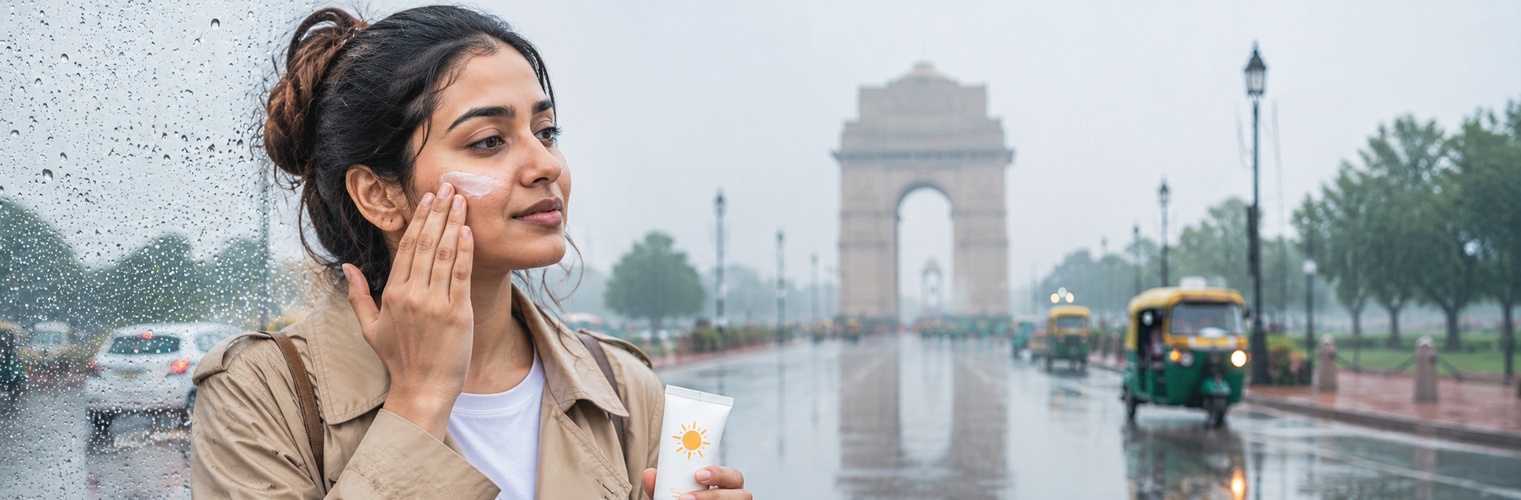
Monsoon brings cloudy skies, cooler mornings, and frequent rain, making many people believe that sunscreen is no longer necessary. However, skipping sunscreen in monsoon can leave your skin exposed to ultraviolet (UV) radiation even when the sun is hidden behind clouds. UV rays can contribute to tanning, pigmentation, premature skin ageing, and other forms of skin damage. The American Academy of Dermatology recommends using a broad-spectrum, water-resistant sunscreen with SPF 30 or higher because UV exposure can occur even on cloudy days.
For people living in Delhi, where outdoor travel, humidity, and sudden changes in weather are part of everyday life, maintaining sun protection during monsoon is particularly important.
Clouds may make the sunlight look weaker, but they do not completely block UV radiation. According to the American Academy of Dermatology, up to 80% of the sun's harmful UV rays can penetrate clouds.
This means your skin can still receive UV exposure while you are:
Therefore, sunscreen in monsoon should remain part of your daily skincare routine rather than being treated as a summer-only product.
Repeated UV exposure can stimulate pigmentation and make the skin appear darker or uneven. Even if you do not experience an obvious sunburn, regular exposure can gradually contribute to tanning.
Sun exposure can worsen existing pigmentation. Visible light may also contribute to skin darkening, particularly in people prone to hyperpigmentation. Tinted sunscreens containing iron oxide can provide additional protection against visible light.
UVA rays are associated with premature skin ageing, including wrinkles, age spots, and loss of skin firmness. Regular sun protection can help reduce this cumulative damage.
One of the biggest monsoon skincare mistakes is assuming that grey skies mean zero UV exposure. Cloud cover changes how bright the day feels, but it does not eliminate ultraviolet radiation.
Delhi's monsoon weather can be humid and sweaty, so choosing a comfortable sunscreen is important. The American Academy of Dermatology recommends looking for three basic features: SPF 30 or higher, broad-spectrum protection, and water resistance.
|
Sunscreen Feature |
Why It Matters During Monsoon |
|
SPF 30 or higher |
Helps protect against UVB rays |
|
Broad-spectrum |
Protects against both UVA and UVB |
|
Water-resistant |
More suitable when sweating or exposed to rain |
|
Non-comedogenic |
Useful for acne-prone or oily skin |
|
Lightweight texture |
More comfortable in humid weather |
If your skin is oily or acne-prone, a lightweight gel or non-comedogenic formulation may feel more comfortable. Those with dry skin may prefer a moisturizing sunscreen. The right choice ultimately depends on your skin type and individual concerns.
Using sunscreen is only helpful when enough product is applied correctly.
Follow these simple steps:
Remember that water-resistant sunscreen is not completely waterproof. Heavy rain, sweating, wiping the face, or washing can reduce the amount of product remaining on the skin.
Many people follow a skincare routine during summer but become inconsistent once the rainy season begins. Some common mistakes include:
A sunscreen with SPF 30 or higher is generally recommended, but a higher SPF does not mean you can stay outside indefinitely without reapplication.
If you notice persistent pigmentation, worsening acne, unusual skin sensitivity, or other changes despite maintaining a basic skincare routine, professional guidance can help identify the underlying concern.
A dermatologist can assess your skin type and recommend suitable products based on your specific needs rather than relying on a one-size-fits-all routine. This becomes particularly useful if you are already dealing with pigmentation, acne marks, melasma, or sensitive skin.
The rainy season may bring relief from Delhi's intense summer heat, but it does not eliminate the need for sun protection. Sunscreen in monsoon helps protect your skin from daily UV exposure that can contribute to tanning, pigmentation, premature ageing, and other sun-related damage. Choosing a broad-spectrum, water-resistant SPF 30+ sunscreen and applying it consistently can make your monsoon skincare routine more effective.
If you are unsure which sunscreen suits your skin type or are dealing with persistent pigmentation, acne marks, or other skin concerns, Soul Derma can help you understand your skin better and choose an appropriate dermatological approach. Protect your skin every season—not just when the sun feels strong.
Yes. Clouds do not completely block UV radiation. UV rays can still reach your skin on cloudy days, so sunscreen should remain part of your daytime skincare routine.
A broad-spectrum sunscreen with SPF 30 or higher is a practical choice for everyday sun protection. Water resistance can also be useful during humid or rainy weather.
Sunscreen can help reduce UV exposure that contributes to tanning and pigmentation. However, no sunscreen blocks every UV ray, so combining sunscreen with shade and protective clothing provides better protection.
Yes. People with oily or acne-prone skin can look for lightweight, non-comedogenic formulations that are less likely to feel heavy or clog pores.
When spending time outdoors, reapplication is generally recommended about every two hours and after swimming or significant sweating.
Yes. Rain, water exposure, sweating, and wiping the face can reduce sunscreen coverage. Water-resistant sunscreen can provide better durability, but it still needs to be reapplied according to the product instructions.
If you spend time near windows or go outdoors during the day, sunscreen may still be beneficial because UVA rays can pass through window glass

Basement W-58, Greater Kailash I, New Delhi, Delhi 110048 India