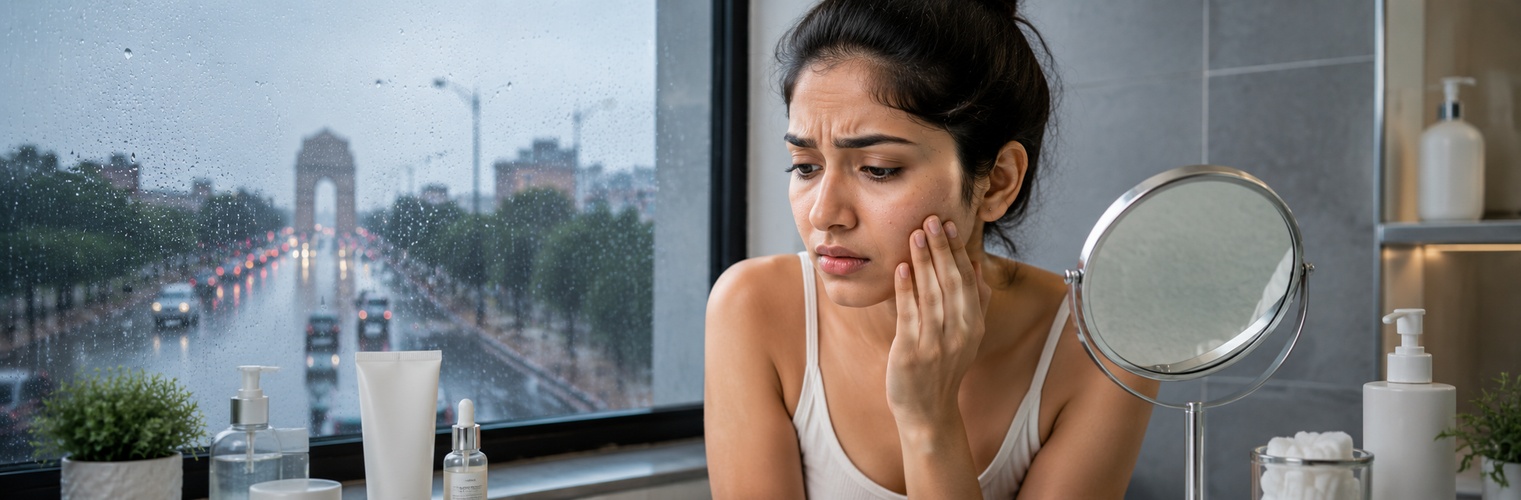
Delhi’s rainy season may bring relief from scorching temperatures, but it can be surprisingly difficult for your skin. High humidity, frequent sweating, pollution, sudden temperature changes, and damp surroundings can make the skin oily, sticky, irritated, or more prone to breakouts. Recent dermatology guidance also highlights that monsoon conditions can increase the risk of clogged pores, acne and fungal infections.
The problem, however, is not always the weather itself. Many people unknowingly make small skincare mistakes during the rainy season that worsen existing concerns. From skipping sunscreen to using heavy creams, these habits can affect the skin barrier and overall appearance. Here are five common skincare mistakes Delhi residents should avoid this monsoon.
Why Does the Rainy Season Affect Your Skin?
Delhi’s humid weather can make sweat evaporate more slowly. As sweat mixes with oil, dirt and pollutants, the skin may feel greasy and pores can become clogged. Damp clothes and prolonged moisture can also encourage fungal growth, particularly in areas such as the feet, underarms and skin folds.
This does not mean everyone needs a complicated monsoon skincare routine. In fact, simple and consistent care is often more useful.
1. Using Heavy Skincare Products
One of the most common mistakes is continuing to use the same thick creams and rich products that may have worked during colder or drier months.
In humid weather, heavy formulations can make the face feel greasy and may contribute to clogged pores, particularly for people with oily or acne-prone skin.
Instead, consider:
Even oily skin needs hydration. Humidity does not automatically mean that your skin has enough water. Maintaining moisturization can help support the skin barrier.
2. Skipping Sunscreen Because It Is Cloudy
Grey skies often create the impression that sunscreen is unnecessary. This is another common mistake in rainy season skincare.
Cloud cover does not mean your skin is completely protected from UV exposure. Daily sunscreen remains important for reducing sun-related tanning, pigmentation and premature skin ageing. Dermatology guidance continues to recommend sunscreen during monsoon weather.
Choose a broad-spectrum sunscreen that feels comfortable on your skin and does not leave you excessively greasy. If you spend considerable time outdoors, reapplication may also be necessary depending on your exposure and the product instructions.
3. Washing the Face Too Frequently
When the face feels oily after travelling through humid Delhi weather, washing it repeatedly can seem like a quick solution.
However, excessive cleansing may strip the skin’s natural protective oils and leave the skin irritated or uncomfortable. Some people then compensate by applying more products, creating another cycle of oiliness and congestion.
A gentle cleanser used appropriately is generally a better approach. For many people, cleansing twice a day is sufficient, with additional cleansing after heavy sweating when needed. Avoid aggressive scrubbing simply because your skin feels sticky.
4. Ignoring Damp Skin and Wet Clothes
This mistake is particularly important during Delhi’s rainy season.
Getting caught in the rain, wearing wet clothes for hours, or leaving the feet damp after travelling can create a warm and moist environment. Such conditions can increase the risk of fungal infections.
Simple habits can make a significant difference:
If you notice persistent itching, redness, scaling or a spreading rash, avoid repeatedly self-treating it with random products. A dermatologist can help identify the actual cause.
5. Over-Exfoliating to Remove Oil and Dullness
When skin becomes oily and dull during monsoon, people often increase scrubbing, exfoliating acids or multiple active ingredients.
This can backfire. Over-exfoliation may irritate the skin barrier and make redness, sensitivity or breakouts more difficult to manage.
Instead, keep your rainy season skincare routine simple. Cleanse gently, moisturize appropriately and use sunscreen. If you want to add exfoliating ingredients, choose them according to your skin type and avoid combining too many strong actives without professional guidance.
A practical routine does not have to involve ten different products.
|
Time |
Basic routine |
|
Morning |
Gentle cleanser → lightweight moisturizer → sunscreen |
|
During the day |
Cleanse after excessive sweating if required → reapply sunscreen when appropriate |
|
Night |
Gentle cleanser → suitable moisturizer |
|
Weekly |
Exfoliation only if suitable for your skin and recommended appropriately |
The exact routine should depend on whether your skin is oily, dry, sensitive, acne-prone or combination.
Occasional oiliness or a few pimples may not require professional treatment. However, persistent acne, recurring fungal infections, severe itching, painful rashes, sudden pigmentation or symptoms that keep getting worse should not be ignored.
A dermatologist can determine whether the concern is related to acne, irritation, allergy, fungal infection or another skin condition and recommend treatment accordingly.
Conclusion
Avoiding common skincare mistakes Delhi residents make during the rainy season can help your skin stay healthier and more comfortable throughout the monsoon. The key is not to overload your routine but to adapt it to humidity, sweating and frequent exposure to damp conditions.
Choose lightweight products, continue using sunscreen, cleanse without overdoing it, keep your skin dry and avoid excessive exfoliation. If a skin concern persists despite basic care, professional evaluation can prevent it from becoming more difficult to manage.
For personalized guidance based on your skin type and concerns, consult the dermatology experts at Soul Derma and build a skincare routine suited to your skin.
FAQs
1. Is monsoon good or bad for skin?
Monsoon can affect different skin types differently. High humidity may increase oiliness, clogged pores and sweating, while damp conditions can increase the risk of fungal infections. A suitable skincare routine can help manage these seasonal changes.
2. Should I use moisturizer during Delhi’s rainy season?
Yes. Humid weather does not mean that your skin cannot become dehydrated. A lightweight, non-comedogenic moisturizer can help maintain the skin barrier without creating an excessively greasy feeling.
3. Can I skip sunscreen when it rains?
No. Cloudy weather is not a reason to completely stop sun protection. A suitable broad-spectrum sunscreen should remain part of your daytime skincare routine.
4. Why does my acne get worse during monsoon?
Increased humidity and sweating can contribute to excess oil, clogged pores and breakouts. Heavy skincare products, inadequate cleansing and touching the face frequently can also contribute to acne flare-ups.
5. How can I prevent fungal infections during the rainy season?
Keep your skin dry, change wet clothes promptly, dry your feet thoroughly and avoid staying in damp socks or footwear for long periods. Persistent or spreading rashes should be assessed by a dermatologist.
6. Is frequent face washing helpful for oily skin?
Not necessarily. Washing too frequently or using harsh cleansers can irritate the skin and disrupt its protective barrier. A gentle cleanser used appropriately is generally a better option.
7. Should I exfoliate more during monsoon?
No. More exfoliation does not necessarily mean cleaner skin. Excessive scrubbing or using too many active ingredients can cause irritation and damage the skin barrier. Exfoliation should be appropriate for your individual skin type

Basement W-58, Greater Kailash I, New Delhi, Delhi 110048 India