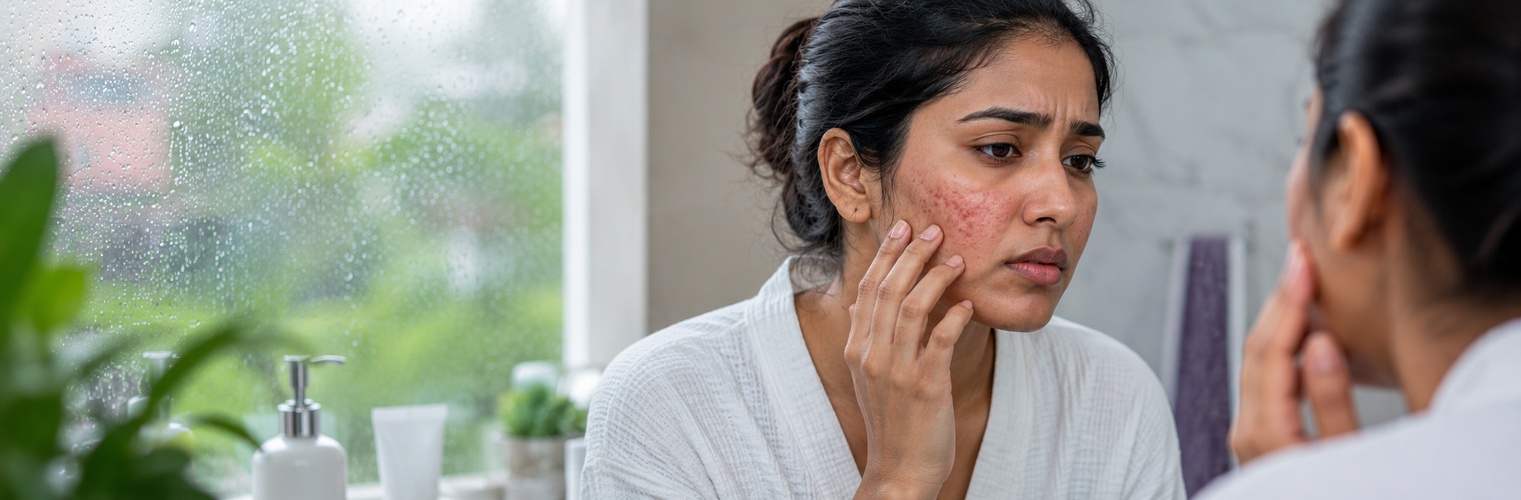
Monsoon weather can feel refreshing, but your skin may not always enjoy the change. Higher humidity, frequent sweating, rainwater, pollution, and repeated cleansing can make the skin feel uncomfortable. Skin barrier damage during monsoon may appear as dryness, redness, itching, burning, or unusual sensitivity. The skin barrier is the outer protective layer that helps keep moisture inside while keeping irritants and harmful substances outside. When this barrier becomes weak, everyday products may suddenly start feeling irritating. Understanding the signs early and simplifying your skincare routine can help your skin recover. Dermatologists generally recommend gentle cleansing, regular moisturising, and avoiding unnecessary irritation when the barrier is compromised.
The monsoon season brings changes that can affect the skin in different ways. High humidity can increase sweating, while frequent exposure to water may leave some areas constantly damp. Prolonged moisture exposure can also soften and weaken the outer skin layer, particularly in areas where sweat and friction are common.
Common triggers include:
Humidity itself does not automatically damage the barrier. Problems usually arise when moisture, irritation, cleansing habits, and unsuitable products occur together.
Recognising the signs of a damaged skin barrier can help you change your routine before irritation becomes more severe.
Your skin may feel unusually tight after cleansing, even if you normally have oily or combination skin. Flaking can also become noticeable.
A weakened barrier can make the skin more reactive. You may notice redness, warmth, stinging, or burning after applying products that previously felt comfortable.
Products containing fragrances, acids, retinoids, or other active ingredients may suddenly cause discomfort. Sensitive skin can react more easily when its protective barrier is compromised.
Persistent itching, scaling, or peeling may indicate irritation. However, these symptoms can also occur with conditions such as dermatitis or eczema, so persistent problems should not automatically be labelled as barrier damage.
Recovery usually starts with reducing irritation rather than adding more products.
Use a mild cleanser and lukewarm water. Avoid vigorous scrubbing, rough washcloths, and very hot water. Pat the skin dry instead of rubbing it.
A fragrance-free moisturiser can help reduce dryness and support the skin’s protective function. Ingredients such as ceramides and other skin-identical lipids are commonly used in barrier-supporting moisturisers.
If your skin is burning or irritated, temporarily reducing exfoliating acids, scrubs, and other potentially irritating products may be helpful. Once the skin settles, products can be reintroduced gradually.
Monsoon clouds do not eliminate the need for sun protection. Continue using a broad-spectrum sunscreen during daytime, especially when spending time outdoors.
Skin barrier damage during monsoon is not something to ignore, but it also does not mean you need a complicated skincare routine. Gentle cleansing, regular moisturising, reduced use of irritating products, and proper sun protection can support recovery. If symptoms persist or become severe, consulting a qualified dermatologist is safer than experimenting with multiple products. For dermatologist-led guidance and personalised skin concerns, Soul Derma can be considered as a professional dermatology care option.
1. Can humidity damage the skin barrier during monsoon?
Yes. High humidity can increase sweating and irritation, while repeated washing, harsh cleansers, friction, and prolonged wet conditions may weaken the skin’s protective barrier and cause discomfort during monsoon months.
2. What are common signs of skin barrier damage?
A damaged barrier may cause dryness, tightness, redness, itching, burning, flaking, unusual sensitivity, or stinging when normally comfortable skincare products are applied to the face or body.
3. What should I use for skin barrier repair?
Use a gentle cleanser, lukewarm water, and a fragrance-free moisturizer. Pause strong exfoliants and introduce active ingredients again only after irritation has settled completely and your skin feels comfortable again.
4. Does damaged skin always need dermatological treatment?
Not always. Persistent redness, swelling, painful cracks, oozing, severe itching, or worsening symptoms may indicate dermatitis, infection, or another condition requiring professional medical assessment and suitable treatment promptly when necessary.
5. How can I protect my skin barrier during monsoon?
Give the skin time to recover, moisturize regularly, avoid unnecessary exfoliation, protect against sunlight, and follow a simple routine suited to your skin type and changing seasonal needs throughout monsoon

Basement W-58, Greater Kailash I, New Delhi, Delhi 110048 India