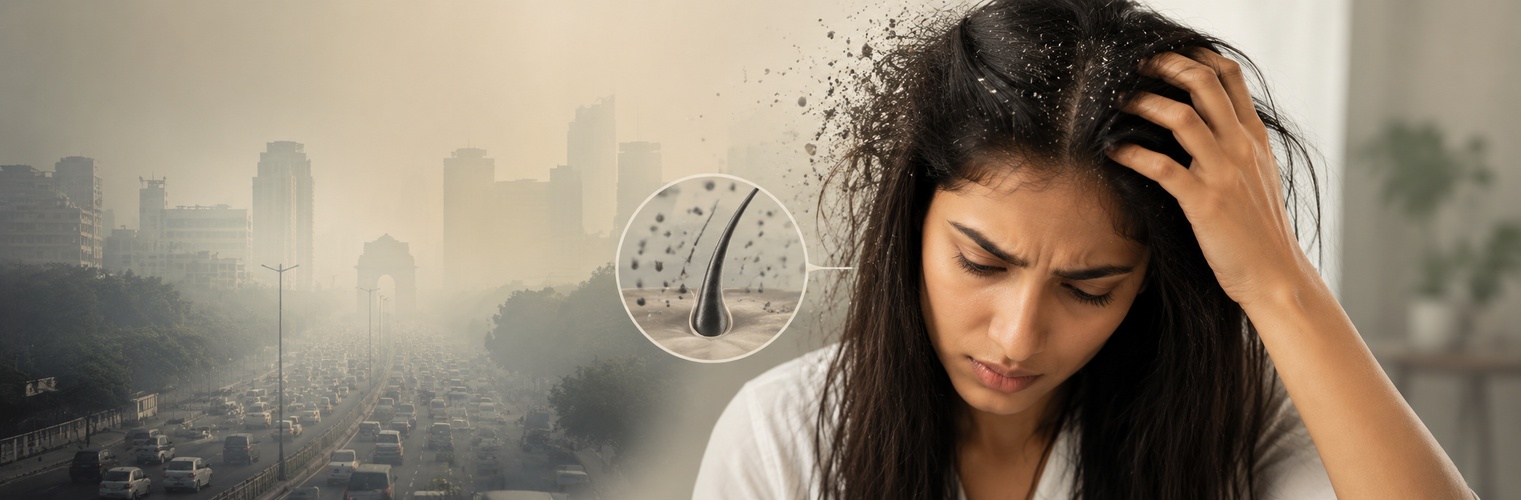
Delhi’s weather can be tough on your hair and scalp. One day, the air feels dusty and polluted, and on another, high humidity leaves your scalp sweaty and your hair sticky. Over time, this combination can make hair feel rough, greasy, dull, and difficult to manage. Delhi pollution can also allow fine particles to settle on the scalp and mix with natural oils and sweat, potentially increasing irritation and scalp buildup.
Humidity adds another challenge by keeping sweat and moisture around the scalp for longer. If you are already prone to dandruff or an oily scalp, these environmental conditions may make symptoms more noticeable. The good news is that a few consistent hair and scalp care habits can help reduce the impact.
Pollution does not simply disappear after your commute. Dust, smoke and fine airborne particles can settle on exposed hair and the scalp. When mixed with sweat and natural oils, they can contribute to an uncomfortable scalp environment.
Some common effects include:
Pollution should not automatically be blamed for every case of hair fall. Genetics, hormones, nutritional deficiencies, stress, medications and underlying scalp conditions can also contribute to excessive shedding. However, maintaining a clean and healthy scalp is an important part of overall hair care.
High humidity changes the way sweat, oil and moisture behave around your scalp. If you spend several hours outdoors, the combination of heat, perspiration and humidity can leave your scalp feeling greasy.
For people with an oily scalp or dandruff tendency, this may make itching and flaking more troublesome. Seborrheic dermatitis, for example, commonly causes an itchy, flaky and sometimes greasy scalp.
Humidity can also affect the hair shaft. Hair may become frizzy, lose its smooth appearance and become harder to style. Repeated exposure followed by excessive heat styling can further contribute to dryness and breakage.
Delhi pollution and humidity can affect the scalp and hair in different but overlapping ways.
|
Environmental factor |
Possible hair/scalp effect |
|
Air pollution |
Dust and particles can settle on the scalp and hair |
|
Sweat |
Can make the scalp feel oily and uncomfortable |
|
High humidity |
Can increase frizz and make hair feel sticky |
|
Pollution + sweat |
May contribute to scalp buildup and irritation |
|
Frequent heat styling |
Can worsen dryness and hair breakage |
The important point is that environmental exposure is only one part of the picture. Persistent hair fall or scalp problems should be evaluated instead of being attributed entirely to Delhi’s weather.
Your scalp can give you several clues that your current routine is not working well.
Watch for:
Dandruff is common and can often be managed with appropriate shampooing and dandruff-specific products. Dermatologists may recommend ingredients such as ketoconazole, selenium sulfide, salicylic acid or zinc pyrithione depending on the situation.
If symptoms continue despite basic care, it is better to get the scalp examined because dandruff-like symptoms can sometimes be associated with seborrheic dermatitis, psoriasis, eczema or fungal infections.
You do not need an elaborate 10-step routine. Consistency matters more.
1. Clean Your Scalp Regularly
After spending time outdoors in polluted conditions, allowing sweat, oil and environmental particles to remain on the scalp for too long may contribute to buildup.
Choose a shampoo according to your scalp type rather than simply washing according to a fixed schedule. People with oily scalps may need more frequent cleansing, while dry or sensitive scalps may require a gentler routine.
2. Do Not Overuse Harsh Products
Trying to remove every trace of oil by repeatedly using strong cleansers can leave the scalp irritated and the hair dry.
Use a gentle shampoo when appropriate and avoid aggressive scrubbing. If you have persistent dandruff, use a dermatologist-recommended anti-dandruff shampoo rather than repeatedly changing products.
3. Keep Sweat From Sitting on the Scalp
If you exercise, commute outdoors or spend considerable time in the heat, pay attention to sweat buildup.
Once you return home, allow your scalp to cool down and cleanse it when necessary. Avoid tying wet, sweaty hair tightly for long periods.
4. Protect Your Hair Outdoors
Simple physical protection can reduce direct exposure.
A clean scarf, hat or other suitable covering can help limit dust settling directly on the hair. Make sure anything worn over the head is clean and does not trap excessive sweat.
5. Condition the Hair Lengths
Shampoo mainly targets the scalp, while conditioner can help keep the lengths smoother and easier to manage.
Apply conditioner primarily to the mid-lengths and ends if your scalp tends to become oily. This can help reduce dryness and friction without unnecessarily adding products to the scalp.
One of the biggest concerns people have when dealing with pollution is hair fall. However, increased shedding should not automatically be considered a direct result of polluted air.
Hair loss can have many causes, including hereditary hair loss, hormonal changes, stress, nutritional deficiencies, illness and scalp disorders. Pollution may contribute to an unhealthy scalp environment, but identifying the actual cause of persistent hair loss is important.
If you notice sudden or prolonged shedding, widening of the hair part, visible scalp, bald patches or significant changes in density, consult a dermatologist rather than relying only on home remedies.
A dermatologist can help determine whether your symptoms are simply related to environmental exposure or whether an underlying condition needs treatment.
Consider professional evaluation if:
Persistent dandruff or scalp inflammation should not be ignored. Dermatologists can distinguish between common dandruff and conditions that require a different treatment approach.
Delhi pollution and humidity can make everyday hair care more challenging, especially when sweat, dust and excess oil accumulate on the scalp. They may contribute to irritation, buildup, dullness, frizz and worsening of existing scalp concerns. However, not every hair problem is caused by the environment.
Regular scalp cleansing, suitable hair products, outdoor protection and attention to persistent symptoms can make a meaningful difference. If dandruff, irritation or hair fall continues despite a consistent routine, professional assessment is a better approach than repeatedly trying random products.
For personalized evaluation and dermatologist-guided solutions for hair and scalp concerns, consult the experts at Soul Derma and choose a treatment plan based on your specific scalp and hair needs.
1. Can Delhi pollution cause hair fall?
Delhi pollution can contribute to scalp irritation and buildup, but it is not necessarily the sole cause of hair fall. Hair shedding can result from genetics, hormones, stress, nutritional issues and several medical conditions. Persistent hair loss should be assessed by a dermatologist.
2. Does humidity cause dandruff?
Humidity does not necessarily cause dandruff by itself. However, heat, sweat and an oily scalp can make existing scalp problems more uncomfortable or noticeable. Recurring dandruff may require an appropriate anti-dandruff shampoo or professional evaluation.
3. How often should I wash my hair in Delhi?
There is no universal washing schedule. Your ideal frequency depends on your scalp type, activity level, sweating and hair condition. If your scalp becomes oily or dirty after outdoor exposure, appropriate cleansing may be needed more frequently.
4. Is pollution bad for the scalp?
Pollutants can settle on the hair and scalp and mix with sweat and natural oils. This may contribute to irritation and buildup. Keeping the scalp clean and reducing unnecessary exposure can support better scalp hygiene.
5. What is the best shampoo for pollution-damaged hair?
There is no single best shampoo for everyone. Choose according to your scalp condition. A gentle shampoo may be suitable for routine cleansing, while persistent dandruff may require a shampoo containing a dermatologist-recommended active ingredient.
6. Can pollution make hair dry and frizzy?
Yes, environmental exposure can contribute to hair feeling rough or dull, while humidity commonly makes frizz more noticeable. Conditioning the lengths and limiting excessive heat styling can help improve manageability.
7. Should I oil my hair after pollution exposure?
Hair oiling may make the hair feel conditioned, but it does not remove pollution from the scalp. If your scalp is oily or dandruff-prone, applying heavy oil may not be appropriate. Cleanse your scalp according to its needs and seek professional advice for recurring scalp problems.
8. When should I consult a dermatologist for hair problems?
Consult a dermatologist if you have persistent itching, severe dandruff, scalp inflammation, recurring lesions, sudden hair shedding, visible thinning or bald patches. Early evaluation can help identify the actual cause and guide suitable treatment

Basement W-58, Greater Kailash I, New Delhi, Delhi 110048 India