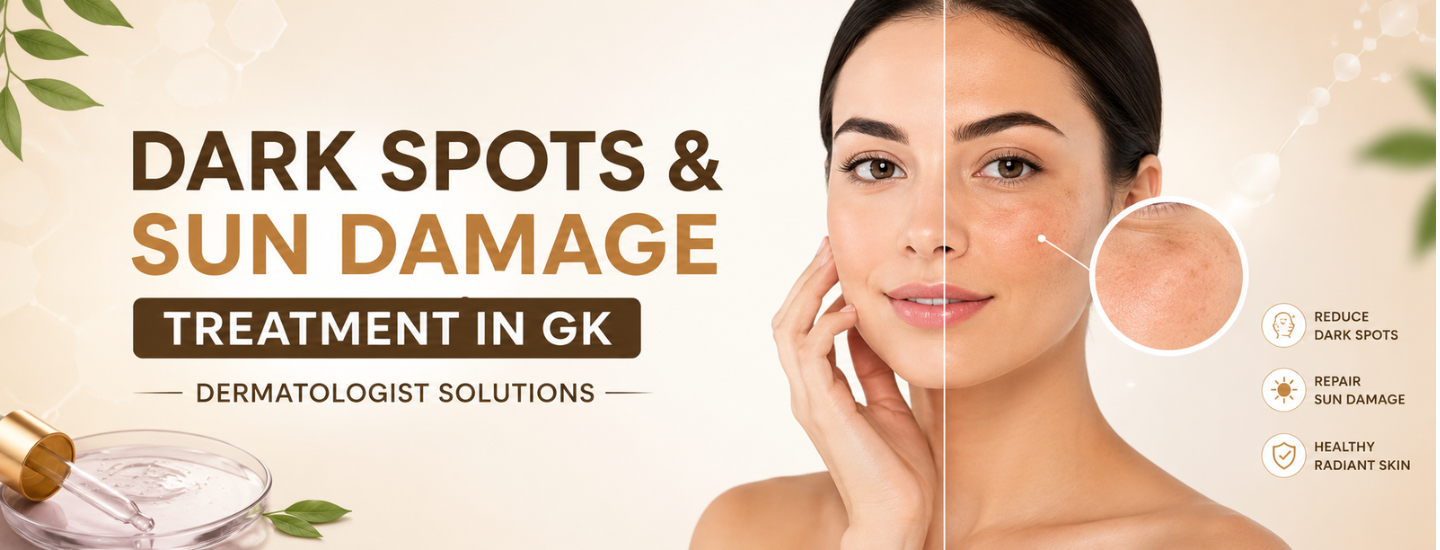
Sun damage and dark spots are typical skin problems, particularly in urban areas with high levels of sunlight and pollution. These problems may manifest as uneven skin colour, pigmentation, or spots that give the skin a dry appearance. Knowing the causes and treatment options can enable you to cope with them.
Causes of Dark Spots and Sun Damage?
Dark spots, or hyperpigmentation, typically results in the production of excess melanin in the skin. The most prevalent causes are long-term sun exposure, acne scars, hormonal changes and ageing. One of the primary triggers is the UV rays. They enter the skin and enhance melanin synthesis which causes the sun spots or tan with time.
In places such as GK (Greater Kailash), where there is a lot of exposure to the outside world, and there is a lot of pollution in the air, then there can be a very rapid skin damage occurring in such places unless serious consideration is given to the importance of taking precautions to avoid skin damage.
Types of Pigmentation
The dark spots are not all alike. The most widespread ones are:
It is important to identify the type since each of them should be treated in a slightly different way.
Dermatologist-Recommended Treatments
There are a number of effective dark spots and sun damage treatments that are offered by modern dermatology. A professional will tend to recommend a mix after consideration of your skin type and concern.
1. Chemical Peels
These treatments exfoliate the upper layer of damaged skin, and new and clearer skin appears. They can be used in mild-moderate pigmentation.
2. Laser Therapy
Laser therapies are directly aimed at melanin and destroy pigmentation. It is among the most successful alternatives for deeper spots, but must always be performed with the supervision of an expert.
3. Topical Treatments
Dermatologists typically recommend cream preparations with such ingredients as retinoids, vitamin C, or hydroquinone. These are used to make spots lighter and the skin generally has a better texture.
4. Microdermabrasion
It is a mild exfoliation procedure which removes dead skin cells and enhances the skin tone in the long run.
Care to avoid further destruction that may occur daily.
Treatment is not sufficient. The daily care is quite significant in helping avoid the formation of new spots.
Consistency is key. No drugs will help, even when the best treatments are applied when sun protection is not taken into account.
When do you visit a dermatologist?
When the dark spots are not fading with the simple skincare or are becoming darker, it is prudent to seek consultation with a dermatologist. This can lead to quicker outcomes, avoid the deterioration of the condition and prevent it at an early stage.
Final Thoughts
The right combination of professional therapy and self-care is essential for managing dark spots and sun damage. With the right instructions and practices, one can have clearer and healthier skin.
For individuals who need expert advice and individualised skin solutions, Soul Derma provides dermatology-based skin care tailored to each individual's skin needs

Basement W-58, Greater Kailash I, New Delhi, Delhi 110048 India